A History Of Thinking.
Or: From Goo To Google.
3.8 billion years ago
(ish. the rocks disagree.)
a bubble.
two bubbles.
more bubbles.
you are a descendant
of a bubble with a protein in it.
that bubble ate another bubble
and kept it.
cells eat other cells and keep them alive inside.
the ones they kept became mitochondria.
a bunch of them formed a group.
the group grew a nerve net.
front.
the net got a front.
the front got a brain.
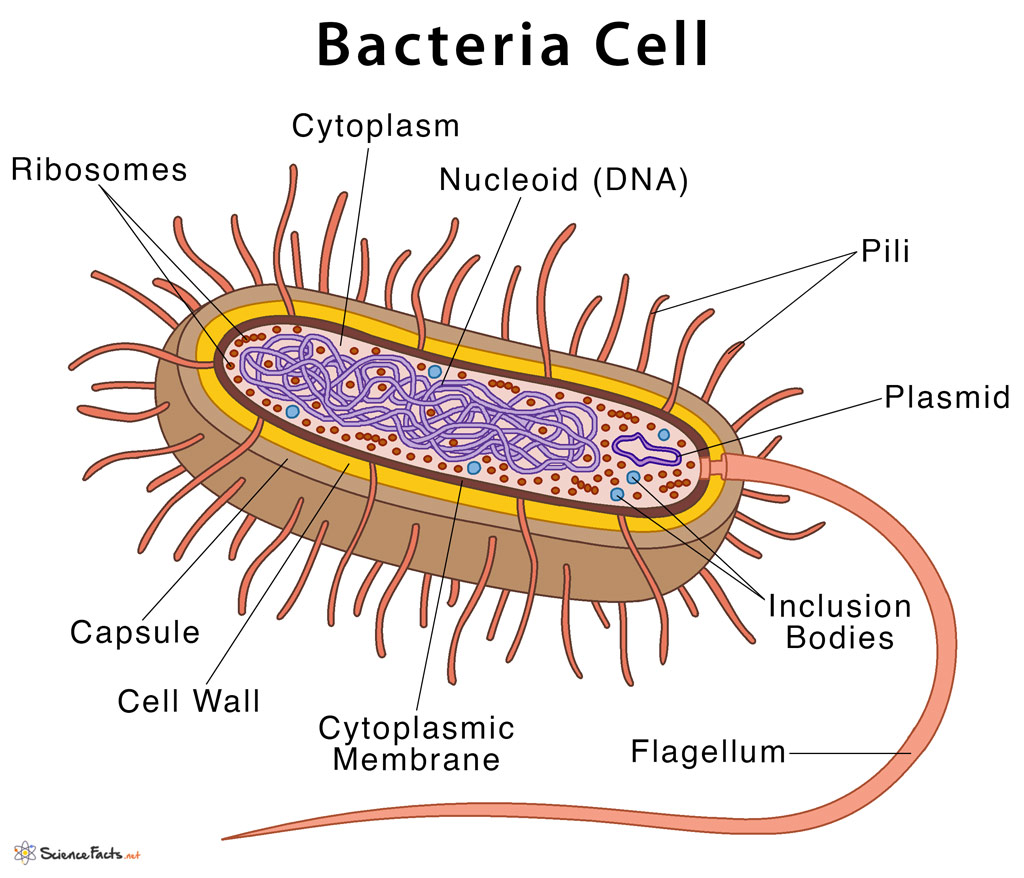
anatomy of a bacteria cell
low concentration high movement sugar
?
is this thinking?
📌
put a pin in it.
OXYGEN
a bacterium invents photosynthesis and poisons
the entire planet with its own exhaust.
also: you need it to breathe. thanks, criminal.
cells start hanging out in groups. it happens 25+ separate times.
life wants to be in a group. it's fine.
~600 million years ago.
possibly invented the neuron. possibly invented it twice, independently.
the point.
a neuron is a cell that said,
"what if i was really long, and my whole job was telling the next cell to freak out."
(rough metaphor. technically: a cell that depolarizes to propagate electrochemical signals. the metaphor holds well enough.)
FRONT. direction of travel
~500 million years ago.
having a front is huge.
you hit stuff with your front.
so the sensors go there.
when you bundle a lot of sensors together —
you get a brain.
A BRAIN.
brains don't come in layers.
they come in renovations.
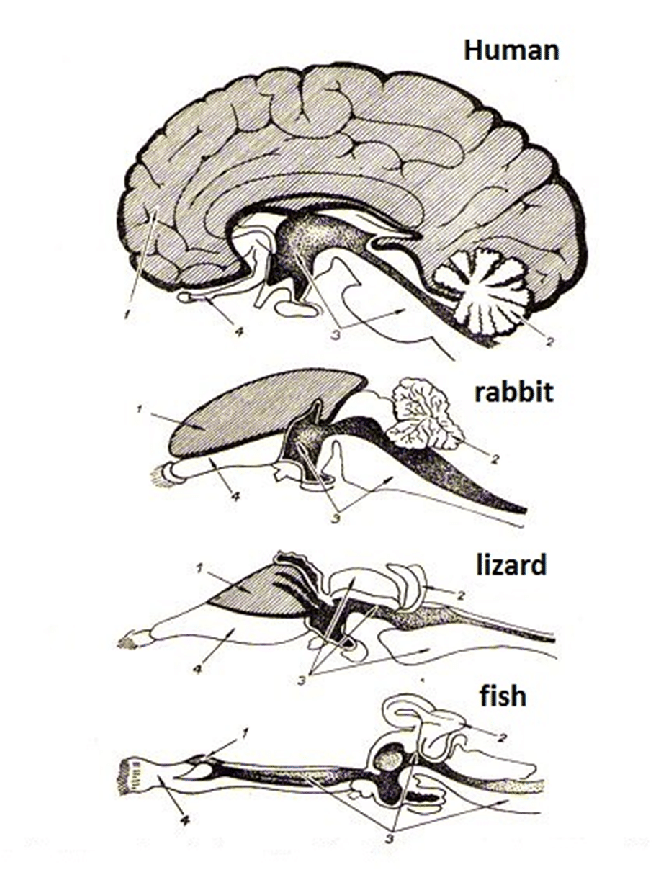
vertebrates don't add new brains on top of old ones.
they elaborate existing regions. fish already have proto-cortex.
you don't have a reptile living inside your skull.
comparative brain development — fish, lizard, rabbit, human
one brain.
500 million years of renovations.
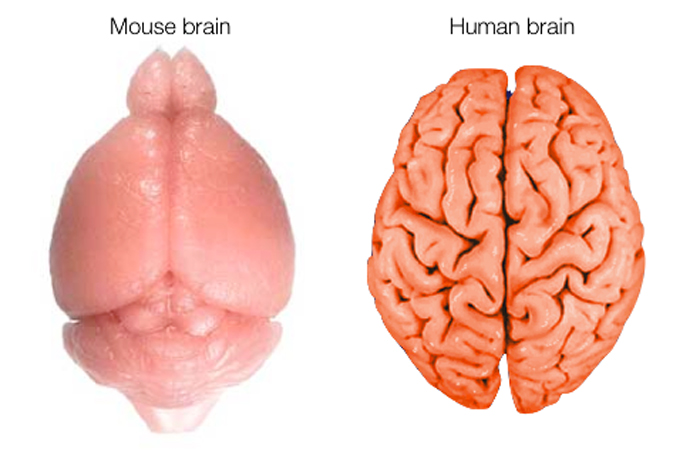
mouse brain vs human brain — scale comparison
not just bigger. more folded.
the wrinkles are a packing solution.
[ octopus.mp4 ]
300,000 years ago: us.
does language make thought possible,
or express thought that was already happening?
douglas hofstadter  ·  gödel, escher, bach  ·  1979
a mind is not a magical substance floating above matter.
it is a strange loop: a self-referential pattern that emerges when a system becomes rich enough to represent the world, represent itself, and let symbols interact according to rules.
individual neurons are not little people. they do not "understand" anything.
they just fire, inhibit, connect, pass signals.
yet from enough simple interactions, something higher-level appears:
symbols· concepts· analogies· self-models· consciousness
low-level mechanism can create high-level meaning.
inner monologue
anendophasia.
no inner monologue. at all.
aphantasia.
some people live at 5.
1vivid. almost photographic.
2clear, not quite real.
3fuzzy. approximate.
4vague impression. barely there.
5blank. nothing. zero.
no inner imagery. thinks fine.
the hard problem
of consciousness.
six answers. no agreement.
mysterianism
the problem is real.
and unsolvable.
deflationism
the problem is confused.
it will dissolve.
panpsychism
consciousness
is everywhere.
illusionism
an illusion
the brain tells itself.
IIT (Tononi)
integrated information.
consciousness = φ.
global workspace
consciousness is
the broadcast.
nobody agrees
what thinking is.
to be more precise: nobody has a definition that survives contact with all the evidence.
[ slime-mold.mp4 ]
developing abstract thought
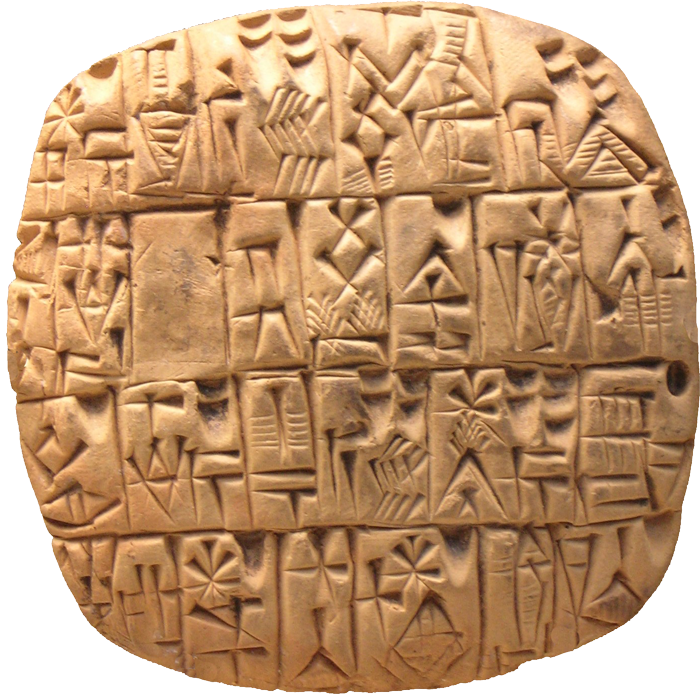
cuneiform clay tablet ~3200 BC
~3200 bc. mesopotamia.
writing.
invented for: beer receipts.
the earliest complete tablets are administrative.
but then memory
escaped biology.
for the first time, a thought could outlive the person who had it.
[ externalizes memory ]
how did we start to set ourselves apart
with abstract thought?
~350 bc. greece.
aristotle.
writes down the rules of formal logic.
same aristotle: also thinks the brain cools blood.
plato disagreed. the head, he said.
[ formalizes reasoning as repeatable procedure ]
~200 ad. rome.
galen.
dissects gladiators.
(and animals. that's where the neuroanatomy comes from.)
[ relocates mind into biological matter ]
~820 ad. baghdad.
al-khwarizmi.
writes a book about something he calls "al-jabr".
his name, latinized, becomes "algorithm".
[ names the step-by-step procedure ]
meanwhile, not the west.
classical chinese: xin.
"heart" and "mind" are the same word.
not a translation error. a different carving.
(buddhist traditions: two thousand years of
careful first-person investigation of consciousness.)
[ refuses to separate heart from mind ]
1637.
descartes.
the body is a machine.
the soul lives in a little gland in the middle of the brain.
(the pineal. this is now called the mind-body problem.)
[ mechanizes the body; fractures mind from matter ]
1848. vermont.
phineas gage.
tamping rod through the head.
lived. personality changed.
the "angel to demon" version got inflated.
the real lesson is still huge: brain damage changes who you are.
[ localizes personality into biological matter ]
1906. nobel prize.
cajal.
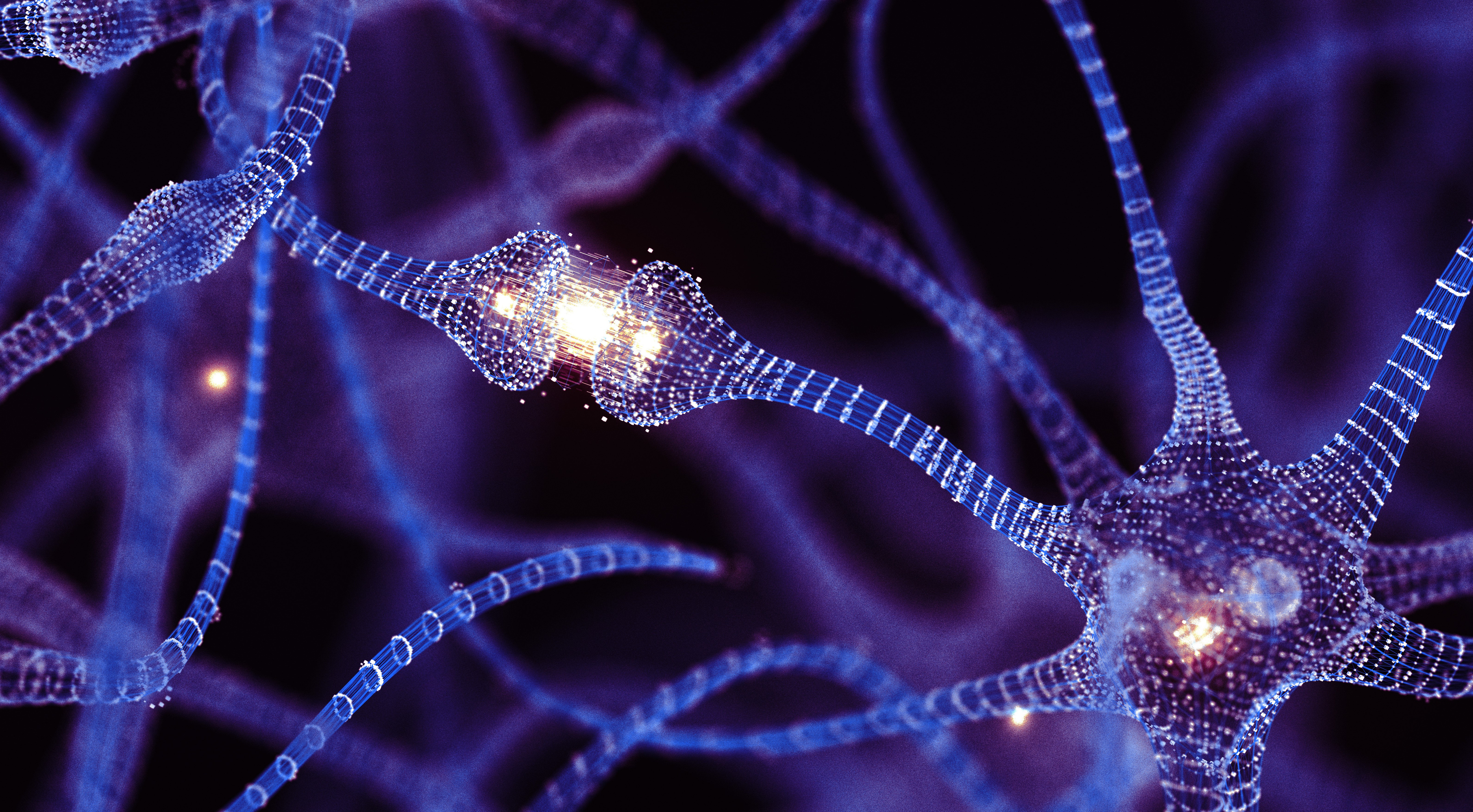
the neuron doctrine.
the brain is made of cells. they don't touch.
they yell across the gap. mostly.
[ biologizes thought — the brain is a cell network ]
real neuron under microscope
actual size: ~0.1mm
~86 billion in your head.
each connected to up to 10,000 others.
~1920s → 1950s.
behaviorism.
skip the inside.
just watch the inputs and outputs.
the cognitive revolution:
no. the inside matters.
[ operationalizes thought; then recants the reduction ]
what if a machine
could do this?
1642. france.
pascal, age 19.
builds a machine so his dad
doesn't have to do taxes by hand.
the calculator now exists.
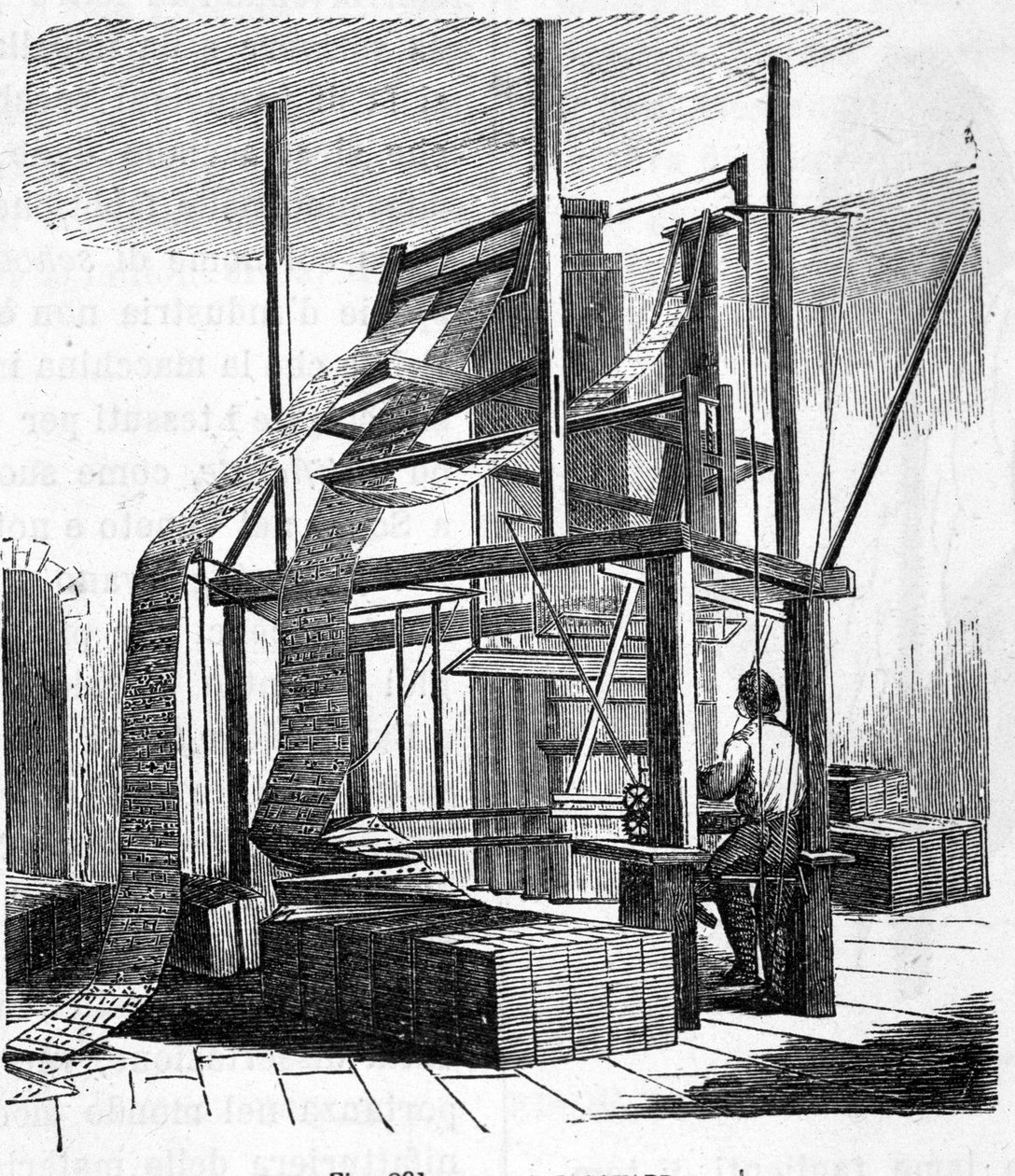
1801. france again.
jacquard.
a loom that weaves patterns from punch cards.
the pattern is the program.
nobody calls it that yet.
[ names the programmable machine ]
jacquard weaving loom — punch card controlled pattern
1837. england.
babbage.
designs the analytical engine.
a computer. one hundred years early.
he never finishes it.
he is bad at people.
1843.
ada lovelace.
publishes the first algorithm —
for babbage's machine.
a procedure for computing bernoulli numbers.
not just a calculator.
it could manipulate any kind of symbol.
including music.
she dies at 36. the machine is never built
in her lifetime. or babbage's.
1854.
boole.
turns logic into math.
true false and or not
sits on the shelf for eighty years.
1936.
turing
imagines a machine.
a strip of tape. a head. a few rules.
any machine. any computation. one machine.
1945. also.
von neumann.
memory. processor. input. output.
you are using it right now.
1947. bell labs.
the transistor.
bardeen. brattain. shockley.
the universe gets a lot smaller.
what if the computer,
could also think.
1956. dartmouth.
"artificial
intelligence."
they coin the term.
predict success in ten years.
🐦 🐦 🐦 — we did not.
CNN
Transformer architecture
1969.ai winter.
1987.another ai winter.
2012.alexnet.
2017.the transformer.

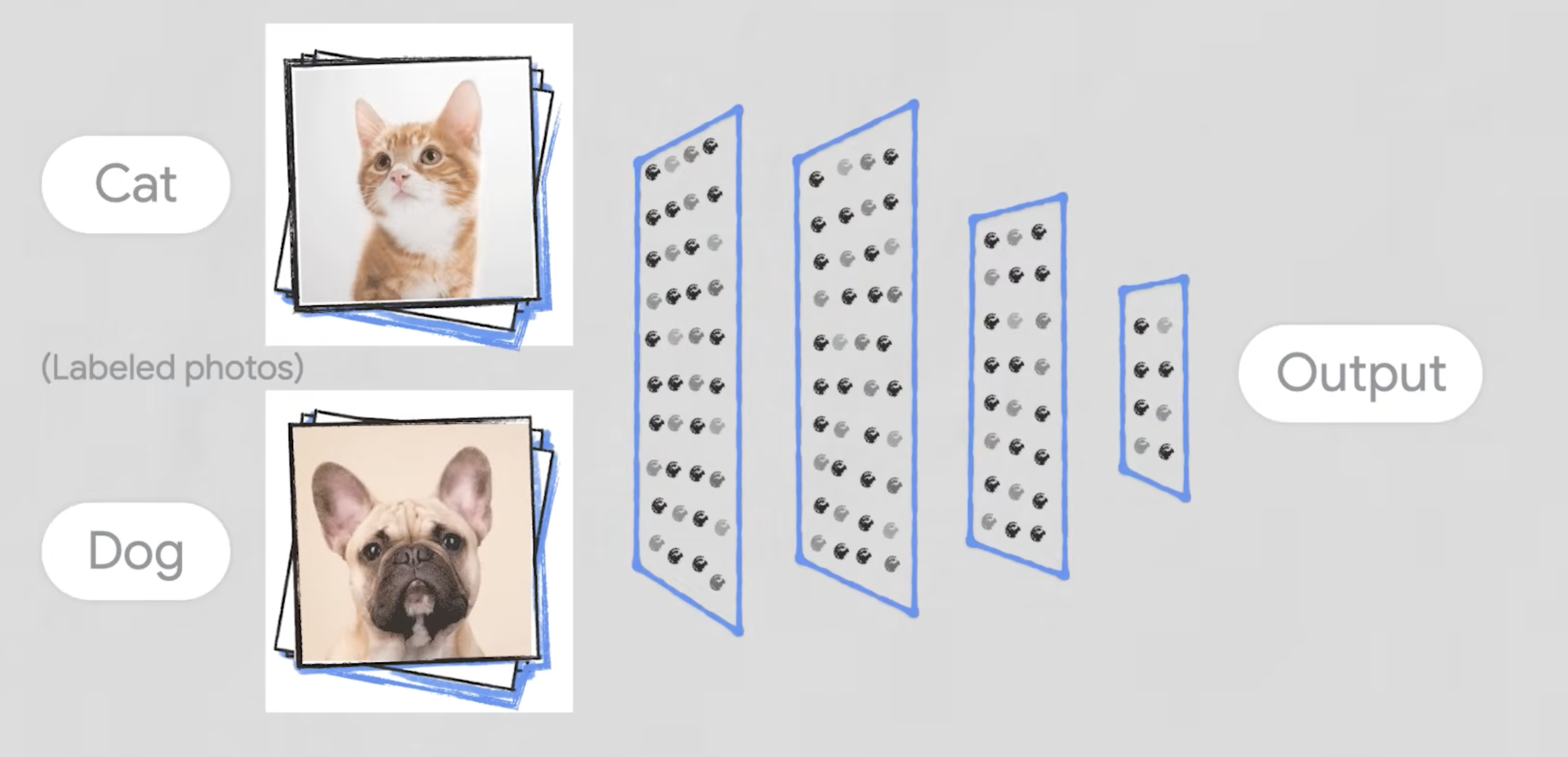
cat — image recognition input
2012. imagenet competition.
alexnet.
given: 1.2 million labelled images.
top-5 error rate: 15.3%.
previous best: 26.2%.
cat
82%
lynx
11%
tiger
5%
the cranks were right.
Σ x₁ x₂ x₃ weights threshold output
artificial neuron — mcculloch & pitts, 1943
actual neuron — cajal, 1906
are artificial neurons like real neurons?
loosely. inspired by a 1943 simplification.
real neurons are far more complex.
1958
1958
the perceptron.
"the embryo of a computer that will be
conscious of its existence." — new york times
it isn't.
1969 → 1987
the winters.
plural. the field freezes twice.
neural-network people mostly considered cranks.
1999 →
the swerve.
gpus built for video games.
polygons are matrix math.
neural networks are matrix math.
nobody planned this.
2012alexnet · 2016alphago · 2017transformer · 2022chatgpt
the cranks were right.
now.
agents.
machines that use computers.
write code. take actions.
while we waited:
1965
moore's law.
transistors double every two years.
1969
arpanet.
first message: "lo". it crashed after two letters.
1971
intel 4004.
2,300 transistors. the first microprocessor.
1989
the world wide web.
tim berners-lee gives it away for free.
[ transformer video 1/4 ]
assets/New Vids/How Transformer Works 2.mp4
[ transformer video 2/4 ]
assets/New Vids/How Transformer Works.mp4
[ transformer video 3/4 ]
assets/New Vids/How Transformer Works 3.mp4
[ transformer video 4/4 ]
assets/New Vids/How Transformer Works 4.mp4
time passes 🐦 🐦 🐦
today: you type words into a box
and a machine gives you words back.
often coherent. sometimes insightful. occasionally insane.
the brain got memory, then emotion, then words,
then writing, then search, then simulation.
a name for what just happened:
the extended mind.
your phone is part of your thinking.
this has been happening since cuneiform.
what if it had a body?
[ physical ai · 1 ]
[ physical ai · 2 ]
[ physical ai · 3 ]
[ physical ai · 4 ]
you just had
a thought.
📌
from beads on a stick
to machines that imitate parts of thought.
in the blink of a historical eye.
what happens next?
thanks.
the end.
— interlude —
how to make a cpu from scratch.
[ any% · speedrun · glitchless ]
rock
step 01.
get a rock.
smashed rock
step 02.
smash it.
silicon dioxide · silica sand
step 03.
now it's 98% silicon dioxide.
step 04.
purify further.
98%
silicon dioxide
99.9%
silicon dioxide
99.9999999%
polysilicon metal
crucible · molten silicon
step 05.
heat it to 1698 kelvin.
(that's 1,425 °c. it's molten now.)
czochralski process · seed crystal
step 06.
dip a seed crystal. pull it out slowly.
silicon boule · monocrystal
step 07.
a monocrystal of pure silicon.
one crystal. one atomic lattice. all the way through.
silicon wafer
step 08.
slice it into wafers.
optionally: dope with boron or phosphorus.
photolithography · chromium quartz mask
step 09.
shine a laser through a chromium-etched quartz mask.
the shadow of the mask draws the circuit on the wafer.
acid etching · clean room
step 10.
develop. acid-etch the exposed silicon.
step 11.
repeat. countless times.
homo-epitaxy. hetero-epitaxy. pseudo-epitaxy. diffusion doping. copper interconnect layers. chemical-mechanical polishing. photoresist applications. acid etching.
silicon dies · diced wafer
step 12.
cut the wafer into dies.
bond wires · flip-chip package
step 13.
bond the wires. package the die.
and that's how you make a cpu.
[ run complete · 13 steps · no skips ]
jump